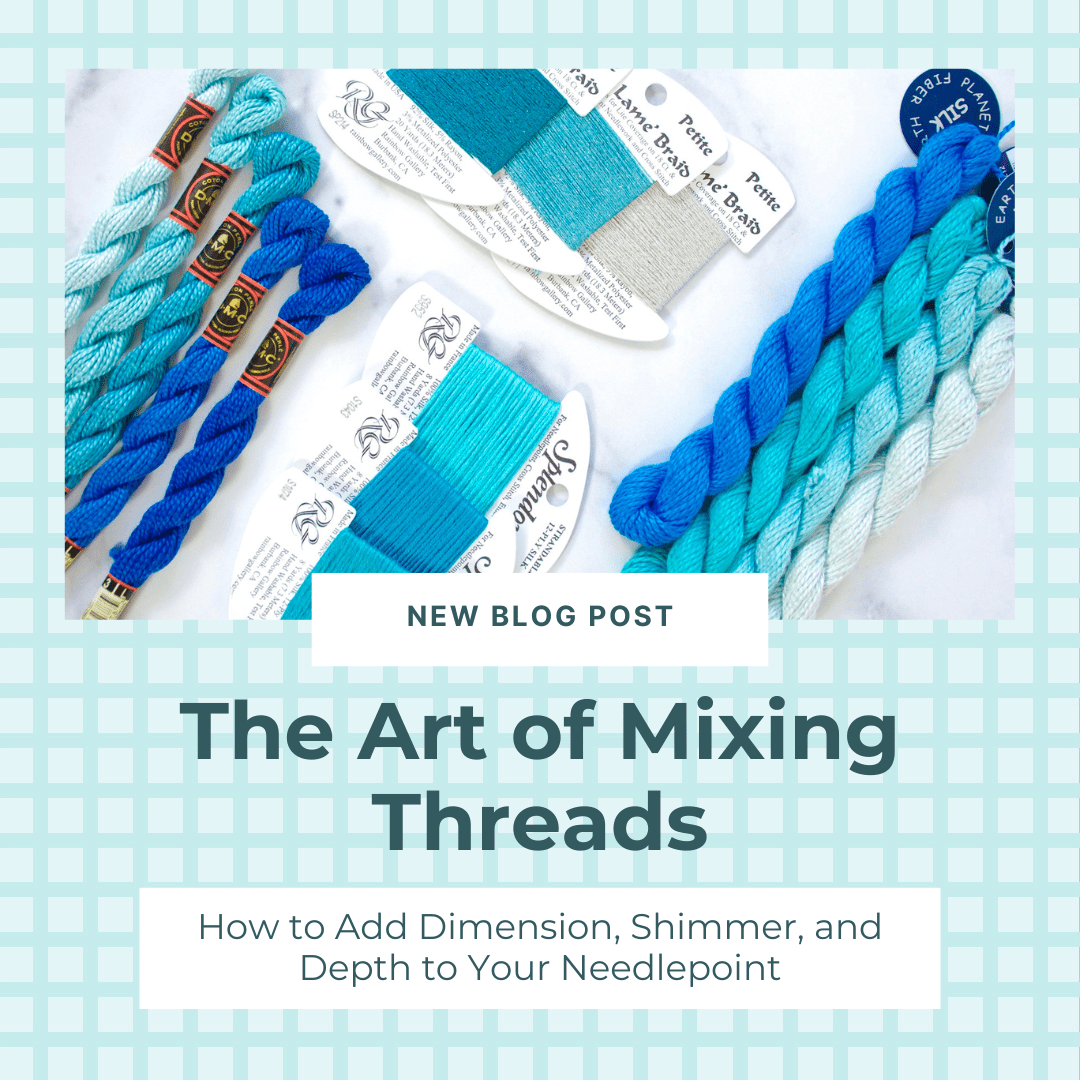
One of the best things about needlepoint is the ability to personalize your project, and that goes beyond color or design. By mixing different types of threads, you can add a whole new level of dimension, texture, and visual interest to your canvas. Whether you're layering soft wool with shimmering metallics or adding silk highlights to a cotton base, combining threads is an easy way to elevate your work.
Here’s how to do it with confidence!

Why Mix Threads?
Different fibers catch light in unique ways, and each brings its own texture to the canvas. By mixing threads, you can:
Add shimmer and sparkle with metallics
Create soft or plush effects with wool
Introduce shine and richness with silk
Maintain coverage and balance with cotton
The result? A finished piece that looks dynamic, dimensional, and anything but flat.
Thread Types & Their Strengths
Silk
Smooth, luminous, and rich in color
Great for areas you want to highlight or make “pop”
Best used for small motifs, borders, or details
Wool
Soft, matte, and full-bodied
Ideal for background areas, clothing, fur, and florals
Adds cozy warmth and texture
Metallic
Adds sparkle and movement
Works best in small doses—stars, ornaments, trims
Blends well with other threads when used sparingly
Cotton
Versatile, durable, and available in a wide range of colors
A great base for most canvases
Easy to blend with wool or silk for coverage and texture

Tips for Combining Threads in One Project
1. Start with a Plan
Before stitching, map out your canvas and consider where each thread type might shine—literally and figuratively. Use metallics where light would naturally hit, wool in shaded areas, and silk for focal points.
2. Mind Your Tension
Different threads have different elasticity and thickness. Wool tends to be more forgiving, while silk and metallics may require more even tension. Test combinations on a doodle canvas to get a feel for how they stitch together.
3. Use Threads Side-by-Side
You don’t have to blend threads in the same stitch—placing different types of threads next to each other can still create dimension. For example, stitch a silk flower next to a wool leaf or outline a cotton background with metallic detail.
Favorite Combinations to Try
Silk + Metallic = Perfect for ornaments, jewelry, or anything that needs sparkle with a luxurious feel
Wool + Cotton = Great for soft textures with sturdy coverage—ideal for backgrounds and animals
Silk + Wool = Adds shine and depth—use silk for highlights or petals, and wool for shading
Metallic + Cotton = A fun combo for lettering, stars, and snowflakes
Mixing threads is part art, part technique—and fully worth it. With a little planning and experimentation, you’ll create pieces that feel alive with light, texture, and movement. Don’t be afraid to step outside the stitching box and play with fiber—you just might discover your new favorite way to stitch.